PUKISTAN (aka Pakistan)

PUKISTAN (aka Pakistan)
Pakistan has virtually become PUKISTAN. Migraine to the World.
why it is also called as BEGGISTAN/ TERRORISTAN /PUKISTAN /SHITTISTAN /PROBLEMISTAN /PORNISTAN
Meaning Of P_A_K_I_S_T_A_N:

Jahan Bas:

P: Pyaar
A: Aman
K: Khushhali
I: Insaaf
S: Shanti
T: Tarakki
A: Ahimsa
N: Nahin Hai

Go Goa Gone

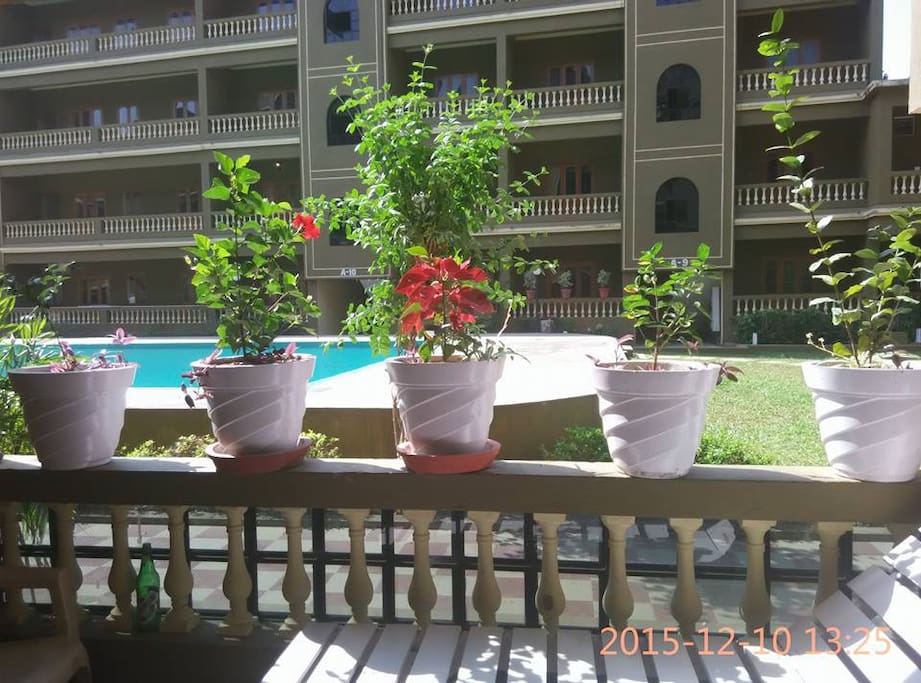
Poolside 1 BHK Apartment in Resort

Siolim, Goa, India
Serene Siolim- Gateway to the pristine beaches of North Goa at Tropical Dreams Resort with Lush green surroundings Ground Floor across the biggest swimming pool in Goa is furnished with SplitAC Ref...
Vacation Rentals in Siolim

Saturday, September 4, 2010

Tehrik-e-Taliban Pakistan-TTP claims responsibility for Quetta, Lahore attacks Press Trust Of India Islamabad, September 04, 2010Fir - Hindustan Times


Tehrik-e-Taliban Pakistan-TTP claims responsibility for Quetta, Lahore attacks
Press Trust Of India
Islamabad, September 04, 2010First Published: 16:47 IST(4/9/2010)
Last Updated: 16:49 IST(4/9/2010)


The banned Tehrik-e-Taliban Pakistan has claimed responsibility for suicide attacks on Shia processions in Quetta and Lahore that killed nearly 100 people and warned that the group would launch attacks in the US and Europe. Dreaded commander Qari Hussain, known as "ustad-e-fidayeen" (trainer of suicide attackers), told journalists in the country's northwest on phone on Friday that the attacks in the two cities were carried out by Taliban suicide bombers.

Though the Taliban are fighting the US and the Pakistan government, Shias were also the targets of the militants, he said.

"Our war is against America and Pakistan," Hussain said. Attacks on the pattern of the botched car bombing in New York's Time Square will be carried out in Europe and the US soon, he said.

More attacks in Europe and the US will prove that the Taliban are "still organised and active," he said.

Pakistani-American Faisal Shahzad, the militant behind the attempted car bombing in New York, was funded by the Taliban and trained at a camp in the country's volatile tribal belt.

Hussain said the US administration's decision to place the Tehrik-e-Taliban Pakistan on a terrorist blacklist showed that America is scared of the militants.

The bounty offered by the US for Taliban chief Hakimullah Mehsud and top commander Waliur Rehman proved that the Taliban had become "a headache for America," he claimed.

Fifty-nine people were killed when a suicide bomber blew himself up at a rally organised by Shia students in Quetta on Friday.

Nearly 40 people died when two suicide attackers targeted a Shia procession in Lahore on Wednesday.

Pakistan on high alert after blast - Central & South Asia - Al Jazeera English--Authorities "beef up" security ahead of mass burials for victims of suicide attack in southwestern city of Quetta


Pakistan on high alert after blast
Authorities "beef up" security ahead of mass burials for victims of suicide attack in southwestern city of Quetta.
Last Modified: 04 Sep 2010 11:06 GMT


Demonstrations are under way following yesterday's deadly attack which claimed the lives of 65 people [Reuters]
Security officials are on high alert across Pakistan ahead of mass burials for the victims of a suicide attack at a Shia Muslim rally in the southwestern city of Quetta.

Pakistani authorities increased security on Saturday in Quetta, the capital of Baluchistan province, and at mosques across the country, after 65 people died in the attack a day earlier.

"Security has been beefed up for the mass burials in the afternoon," Malik Mohammad Iqbal, the provincial police chief, said.

Protesters have demonstrated at the scene of the attack, in anger at what they called lax security measures. Wider demonstrations were expected for later in the day.

Businesses in Quetta were closed on Saturday following a call from the local traders associations to stage protests.

"Streets are deserted and security forces and personnel of anti-terrorism force are patrolling in different areas," an AFP news agency reporter said.

Pakistani Taliban 'responsible'

At least 200 people were injured in the attack, for which the Pakistani Taliban claimed responsibility. But police said so far, no arrests had been made and that an investigation was in progress.

The bomber, who was among a 450-strong crowd marching through the city, blew himself up as the procession reached the main square.

Chaotic scenes followed, with an angry mob starting fires and shooting into the air while others fled or lay on the ground to avoid the gunfire.

Police were forced to quell unrest after the bombing, Sardar Khan, the chief of Quetta's police control room, said.

"An angry mob tried to set on fire a private building and vehicles. Some of the participants were armed and they were firing in the air. They also set on fire some bicycles and motorcycles."

Major-General Athar Abbas, a spokesman for the Pakistani military, told Al Jazeera that such attacks are taking place in urban centres because "the army has moved into large swathes of tribal areas, denying [the fighters] their freedom of movement and dislodging them from their main strongholds".

"[As a result] they have now resorted to acts of desperation, targeting our population and trying to exert pressure on the government and the military to reconsider their operations in tribal areas as they are being defeated there ... this is the phenomenon that we see."

Attack condemned

Yousuf Raza Gilani, Pakistan's prime minister, strongly condemned the bombing and called for an immediate investigation.

Washington also weighed in, condemning the targeting of civilians in Pakistan.


Attacks against religious minorities come at an already difficult time as flood aid trickles into Pakistan [AFP]

"To target innocent civilians during the Muslim holy month of Ramadan at an already difficult time as the country is working hard to recover from terrible flooding caused by monsoons makes these acts even more reprehensible," the White House said.

Friday's rally in Quetta was held to mark al-Quds day, an international event staged each year by the Shia community to oppose Israel's control of Jerusalem and show solidarity with Palestinian Muslims.

Shia Muslims are a minority in Pakistan, accounting for around a fifth of the country's 160 million population, which is dominated by Sunnis.

Fighters have launched a series of attacks as Muslims mark the final days of the holy month of Ramadan even as the country struggles to deal with massive flooding that has killed nearly 1,800 people and left millions reliant on aid handouts.

More than 3,660 people have been killed in a series of suicide attacks and bomb explosions, many of them carried out by the Taliban and other al-Qaeda-linked fighters, in Pakistan during the last three years.

Source: Al Jazeera and agencies

Friday, September 3, 2010

Shias targeted in Pakistan bombing - Central & South Asia - Al Jazeera English


Shias targeted in Pakistan bombing
Three blasts hit Shia Muslim processions in the city of Lahore, killing at least 33 people and wounding scores more.
Last Modified: 02 Sep 2010 10:19


Police said the bombs were detonated near crowds as Shia Muslims marked the anniversary of Ali's death [AFP]
At least 33 people have been killed and up to 170 others wounded after a series of blasts struck processions of Shia Muslims in the Pakistani city of Lahore, officials say.

The blasts on Wednesday, suspected to be suicide bombings, hit three separate locations as 35,000 Shia Muslims marched in a traditional mourning ceremony for the assassination of Ali, the Prophet Muhammad's cousin, some 1,300 years ago during the month of Ramadan.

"The three explosions took place at the end of a Shia Muslim mourning procession in Lahore city," AFP news agency quoted a police official as saying on Wednesday.

It was the latest in a long history of violent attacks against Shia Muslims, which are frequently claimed by extremist and pro-Taliban groups, although they had halted in recent weeks as the country struggles with some of its worst flooding in decades.

Yousuf Raza Gilani, Pakistan's prime minister, condemned the attacks, saying in a statement that the attackers would not escape justice.

Marchers' fury

After the blasts, the marchers erupted in fury, setting fire to a police station, another police facility, two police cars and three motorcycles, Zulfiqar Hameed, a senior police officer, said.

Police threw tear-gas canisters at the crowd and fired shots in the air to disperse the crowd, he said.

The first blast was a time bomb that exploded in the street near a well-known Shia Muslim building, Hameed said.

Footage of that explosion shown on Pakistan's private Geo television channel showed a small blast erupting amid a crowd of people on the street followed by a large plume of smoke.

Hundreds of people fled from the blast, while others rushed to carry the wounded to safety.

Minutes later, with the streets in chaos, a male suicide bomber who appeared about 18-years-old tried to force his way into an area where food was being prepared for the marchers to break the traditional Ramadan fast and exploded, Hameed said.

Soon after, another suicide bomber detonated himself at an intersection near the end of the procession.

Mourning call

Abbas Kumaili, a prominent Pakistani Shia Muslim scholar as well as a senator, called for three days of mourning over the attack and condemned the bombers.

"They are our enemies, both Shias and Sunnis should remain united and foil their evil designs," he said.

Hours earlier, three people were wounded in a shooting near a similar Shia Muslim procession in the southern city of Karachi, but Iqbal Mahmood, a senior police officer, said the incident did not target the march.

In July, twin suicide attacks at Pakistan's most popular Sufi shrine killed 42 people.

Also on Wednesday, a bomb exploded near a police vehicle in the town of Shabqadar in northwest Pakistan, killing one passer-by and wounding 15 people, including one police officer, Nisar Khan, another police officer, said.

The bombings came after Pakistan army jets and helicopters targeted fighters' hideouts near the Afghan border, killing 60 people identified as fighters or their family members, including children, security officials and a witness said.

Source: Al Jazeera and agencies

Deadly bombing at Pakistan rally - Central & South Asia - Al Jazeera English


Deadly bombing at Pakistan rally
More than 50 people killed in suicide bomb attack at large protest in southwestern border city of Quetta.

The blast is the second attack on Shia Muslims in Pakistan in a week [AFP]
At least 54 people have been killed and 200 injured in a suicide attack targeting a Shia Muslim rally in Pakistan's southwest city of Quetta, a military source in Quetta told Al Jazeera.

Police officers said the bomber was among the 450-strong crowd and had detonated the device on reaching the main square in the city on Friday.

The explosion triggering chaotic scenes, with some people set on fire as others fled or lay on the ground to avoid ongoing gunfire.

The bomb appeared to target the rally being held for Al-Quds day, an international event held every year by the Shia community in opposition to Israel's control of Jerusalem and to show solidarity with Palestinian Muslims.

Unconfirmed reports said that the attack was claimed by the Laskhar e Jhangvi (Army of Jhangnvi), an armed group known for its attacks against Pakistan's Shia community.

Shia minority

Shia Muslims are in the minority in Pakistan, accounting for around a fifth of the country's 160 million population, which is dominated by Sunnis.

"What we have seen unfortunately in the holy month of Ramadan, is that these so called Islamic groups, who profess to be the saviors of Islam, have continued their suicide bombings on innocent civilians and on our military forces and police forces," Farahnaz Ispahani, a media adviser to the president of Pakistan, told Al Jazeera.

"And what we have seen recently is also an increase of attacks on the Shia minorityin Pakistan," she said.

Police were forced to quell unrest following the attack, said Sardar Khan, chief of Quetta's police control room.

"An angry mob tried to set on fire a private building and vehicles. Some of the participants were armed and they were firing in the air," said Khan.

"They also set on fire some bicycles and motorcycles."

Local television channel AaJ said one of its drivers had been killed in the blast, while there were reports of several other journalists injured in the incident.

Yousuf Raza Gilani, Pakistan's prime minister, strongly condemned the incident and called for an immediate inquiry into the incident. The US embassy also condemned the attack.

Ramadan violence

It was the latest in a string of attacks as Muslims marked the final days of the holy month of Ramadan.

Earlier, at least one man was killed and four wounded on Friday when a suicide bomber blew himself up after being apprehended by police outside a mosque of the Ahmadi sect in the city of Mardan in northwest Pakistan, police said.

"A suicide bomber was trying to enter the Ahmadis' worship place, but he was intercepted by police," Waqif Khan, the Mardan police chief, said, adding that the bomber had been shot before blowing himself up on the ground.

"A passerby was killed and four others were wounded in the firing and suicide attack," Khan said.

He said it was unclear whether the man was killed by the bomb or by gunshots fired by the guards.

Police have handed over the bomber's body parts to a forensic team, Khan said.

In the northwest city of Peshawar, which has often been targeted by armed groups, at least three policemen were injured when a bomb exploded near their patrol vehicle, police said.

The officers were checking vehicles on the city's ring road and Mohammad Karim Khan, a senior police official, said the bomb was detonated by remote control.

On Wednesday, three suicide bombers killed 31 people and wounded hundreds when they targeted a Shia mourning procession made up of thousands of people, at the moment of the breaking of the fast in the holy month of Ramadan.

Religious violence in Pakistan, mostly between Sunni and Shia groups, has killed more than 4,000 people in the past decade.

Ahmadi's attacked

In May, nearly 100 people were killed in the eastern city of Lahore after armed groups stormed two Ahmadi prayer halls, launching gun and grenade attacks.

Gunmen later raided the hospital where victims were being treated, killing four people in a shootout.

Founded by Ghulam Ahmad, who was born in 1838, the Ahmadi sect believes that Ahmad himself was a prophet and that Jesus died aged 120 in Srinagar, the summer capital of Indian-ruled Kashmir.

Pakistan declared them non-Muslims in 1974 and 10 years later barred them from calling themselves Muslims.

Many attribute the wave of violence in Pakistan over the past three years to Islamabad's alliance with Washington and the US-led war against a resurgent Taliban in neighbouring Afghanistan.

They say the attacks are co-ordinated by Taliban and Al Qaeda-linked fighters living in the remote mountainous areas bordering Afghanistan.

Source: Al Jazeera and agencies

Thursday, September 2, 2010

DAWN.COM | Metropolitan | Pakistan kite ban grounds Lahore's festival plans

Pakistan kite ban grounds Lahore's festival plans

Thursday, 25 Feb, 2010

LAHORE: A ban on a decades-old and colorful tradition of kite-flying has riled many Pakistanis, but authorities say the sport has killed people and encourages “immoral” celebrations.

The annual kite-flying festival of Basant, which marks the start of spring in eastern Punjab, involves aerial duels in which participants try to bring down each other's kites using string coated in a sticky paste of ground-up glass or metal.

Women dress in their most brilliant colors for what's become a major festival drawing thousands of celebrants to Lahore as well as multinational companies that rent rooftops for clients and guests.

“It's our culture,” said Shoaib Mehmood Naqeebi, a shopkeeper in Lahore. “Our forefathers were celebrating it. It's an event where we share happiness with family and friends. It's fun. It's harmless.”

But Pakistan's Supreme Court banned kite-flying nationwide in 2005 in response to an outcry over injuries and deaths caused every year by the glass-coated string. The court added that the ban could be lifted for a limited period if a city requests it.

But last month, the Lahore High Court turned down a request for lifting the ban for the Basant festival.

Every year, Pakistani media report dozens of deaths and injuries caused by the high-flying duels, mainly of children and motorcyclists whose throats are sometimes cut by the string.

For many fans in Punjab, it's an unfair decision, one that costs the city and its merchants money.

“Look at what's happening in this country,” said Syed Nazim Ali, a student of business administration at Punjab University.

“Everyday you hear news about blasts, suicide bombings and war. So what if I get a day or two for entertainment with my family?”

The government should concentrate on more serious crimes instead of bothering with banning kite-flying, he said.

Sajjad Bhutta, the top district official for Lahore, told Reuters that the government would defend the ban because the issue is not only public safety.

“Immoral acts like drinking and dance parties have become part of it,” he said. “You cannot raid each house so an event that spreads immorality and causes death cannot be allowed in a Islamic society.”

Extremist groups also oppose kite flying, branding it a Hindu festival that promotes gambling. In the 1990s, the Afghan Taliban infamously banned kite-flying, a restriction that figured prominently in the popular novel and movie, “The Kite Runner.”

But the ban also affects kite merchants, the Punjab Kite-Flying Association says, causing unemployment and financial losses in the millions of rupees.

After the ban, Naqeebi said, he rented out his shop and started selling beads in the driveway of his home. “Nobody cares how difficult my life is now.”

Another merchant, Shahid Hussain, said his earnings had been reduced by 75 per cent from what he used to make selling kites and string.

Bhutta, the district administrator, dimissed claims of lost business.

“There is no big economic impact, as people were mostly selling kites as a side business,” he said.

The controversy has become political. Punjab governor Salman Taseer in mid-February announced on local television that he would celebrate Basant in defiance of the ban.

Lahore police also detained the kite-flying association's secretary general Sheikh Salim on Feb. 20 after he announced that Basant would take off on March 7.

The district government won't listen to his arguments, he said. “They don't care about us and people attached to this business,” he added. “They have made up their minds.”

DAWN.COM | Columnists | Spectre of secularism

Spectre of secularism
By I.A. Rehman
Thursday, 02 Sep, 2010

The spectre of secularism is haunting the privileged elite of Pakistan, some privileged by birth or status, others by their grading in the realm of belief. Now pollsters have joined the effort to scare the people with reports that a majority of young persons prefer theocracy to secularism.

Unfortunately, huge confusion has been caused by presenting Islam and secularism as two mutually antagonistic and irreconcilable philosophies. In many cases this is done by persons who cannot, or do not wish to, analyse both Islam and secularism objectively.

The Oxford Dictionary gives many meanings and usages of the word ‘secular’, including a member of the clergy not bound by a religious rule; not belonging to or living in seclusion with a monastic or other order; belonging to the world and its affairs as distinguished from the Church and religion; civil, lay; non-religious, non-sacred; et al.

The strongest opponents of secularism always rely on its definition as “the belief that religion and religious considerations should be deliberately omitted from temporal affairs”.

However, it can be substantiated with the help of authoritative texts that Islam views secularism as a way of life that is inspired by Islam’s ethical ideal (Iqbal’s favourite expression) but in which reason is used to promote the good of humankind. That is why duties to human beings are considered more important than obligations to God.

The principle that Islamic injunctions can be amended to suit changes dictated by time and social development has been upheld by a long list of Islamic scholars, from Ibnul-Qaiyyam Jauzia and Ibn Khaldun to Allama Iqbal and that makes a strong case for Islam’s compatibility with secularism. (Falsafa Shariat-i-Islam, Majlis Taraqqi-i-Adab).

In Pakistan the advocates of secularism rely mostly on the Quaid-i-Azam’s dictum that religion has nothing to do with the business of the state. Actually, the subcontinental Muslims’ contribution to secularism has a much longer history, beginning (if not earlier) with Allauddin Khilji’s refusal to follow Qazi Mughis’s plea to convert or kill the more numerous non-Muslims. Babar advised Humayun to treat people’s religious affiliations as changing seasons and Aurangzeb scolded his teacher for making him waste his time on Arabic grammar while he should have been taught governance in a world that was larger than Shah Jahan’s kingdom. All these ideas bore the stamp of secularism.

In the modern phase of our history, Syed Ahmad Khan is considered the founder of the movement for Pakistan. He declared “the root cause of people’s misfortune lies in mixing the problems of the world with the problems of religion that are immutable…. Mixing of the affairs of the world with the affairs of religion is madness … conditions of society and civilisation change day by day, therefore, they cannot be part of religious commandments”. (Sibte Hassan in the Battle of ideas in Pakistan, Pakistan Publishing House, 1986).

Pakistan’s anti-secularism lobby has little respect for Allama Iqbal though quite a few mujavirs have won comfort by selling his name. In Iqbal’s life 1930 was a most significant year. It was the year he delivered the Madras Lectures, later on published in a book The Reconstruction of Religious Thought in Islam, and it was the year when he addressed the Allahabad session of the Muslim League.

In the lectures, Iqbal’s overriding concern was to see the unfreezing of the Islamic jurisprudence that had been frozen for 500 years and had suffered greatly under what he described as “Arab imperialism”. He began his sixth lecture, ‘The principle of movement in the structure of Islam’, by describing Islam as a “cultural movement” and holding “that all human life is spiritual in its origin”. He added that a prophetic revelation was world-life’s intuitive perception of its own needs and its choice of direction at critical moments, and that “loyalty to God virtually amounts to man’s loyalty to his own ideal nature”. He told his fellow Muslims that “a false reverence for past history and its artificial resurrection constitute no remedy for a people’s decay”.

Allama Iqbal upheld the Turkish view that “according to the spirit of Islam the caliphate or imamate can be vested in a body of persons, or an elected assembly”. He gave ijma great importance as a source of lawmaking through a modern assembly. Then he addressed the question as to how to prevent mistakes by an assembly of lay persons. He rejected the idea of a board of ulema to advise parliament and told the ulema to be part of the assemblies.

“The only effective remedy for the possibilities of erroneous interpretations is to reform the present system of legal education in Mohammadan countries, to extend its sphere, and to combine it with an intelligent study of modern jurisprudence” (emphasis added, all references from the book published by Sh. Muhammad Ashraf, 2007).

In the last week of December 1930, Iqbal gave his Allahabad address. He declared that “Islam, regarded as an ethical ideal plus a certain kind of polity — by which expression I mean a social structure regulated by a legal system and animated by a specific ethical ideal — has been the chief formative factor in the life-history of the Muslims of India.” Then he added: “Indeed, it is no exaggeration to say that India is perhaps the only country in the world where Islam, as a people-building force, has worked at its best.” Since no Islamic theocracy was ever established by the Muslims in India, Iqbal could only be extolling their secular traditions.

After proposing a Muslim state in the north-western part of India, Iqbal dispelled the “Hindus’ fear that the creation of autonomous Muslim states will mean the introduction of a kind of religious rule in such states”. He then approvingly referred to a newspaper comment to the effect the Indian Muslim states did not ban interest and offered it as an example of “the character of a Muslim state”. This is secularism.

One should like to suggest a fresh interpretation of the Allama’s lectures and his Allahabad address. He may well emerge as a strong Islamic defender of secularism.

While the common people of Pakistan have no reason to share the ashrafiya’s fears of secularism they have every reason to dread the anti-secularism lobby. The “principal institutions of a secular society” listed by Altaf Gauhar are: the elected legislature, the judiciary, and the press”. (Battle of Ideas)

It is quite clear that all these institutions have to bear with one another. The Supreme Court can never sack parliament or the media, nor will parliament ever be foolish or strong enough to abolish the Supreme Court or the media. But the extremist militants that are being reared by anti-secular elements, if they ever capture the state, will almost surely pack off parliament, the Supreme Court and the media into oblivion. The choice before the people of Pakistan has never been clearer.

Wednesday, September 1, 2010

DAWN.COM | Pakistan | Turkmen, Pakistani presidents pledge pipeline summit

Turkmen, Pakistani presidents pledge pipeline summit

Wednesday, 01 Sep, 2010
ASHGABAT: The leaders of Turkmenistan and Pakistan have called for a top-level summit to revive a stalled project to build a natural gas pipeline from the ex-Soviet state to the east, state media said Wednesday.

Ashgabat and Islamabad agreed in 2002 to build a 1,700 kilometre (1,060 mile) pipeline to deliver Turkmen gas to Pakistan and India via Afghanistan but the project has stalled because of the conflict with the Taliban.

The summit, proposed for December, is the latest sign of growing momentum around the project following a series of recent high-level talks between regional leaders and the signing of a framework deal in Kabul on Monday.

Turkmen President Gurbanguly Berdymukhamedov and his Pakistani counterpart Asif Ali Zardari agreed in telephone talks to hold the meeting in the Turkmen capital Ashgabat, Turkmen state television said.

Zardari “would be pleased to participate in a December meeting of the heads of states of the participants of the project,” it reported following the conversation.

The pipeline aims to transport over 30 billion cubic metres of gas annually from the Dauletabad gas fields in southeast Turkmenistan to Afghanistan, Pakistan, and possibly India.

Despite receiving financing from the Asian Development Bank (ADB) the project, whose route would take it through conflict torn-Helmand and Kandahar in Afghanistan and Quetta in Pakistan, has been held up by security problems.

Turkmenistan sits atop the world's fourth-biggest natural gas reserves and Russia, China and the West are vying to expand their presence there as the country cautiously relaxes the policy of isolation imposed by Berdymukhamedov's late predecessor Saparmurat Niyazov. – AFP

Popular Posts