Go Goa Gone
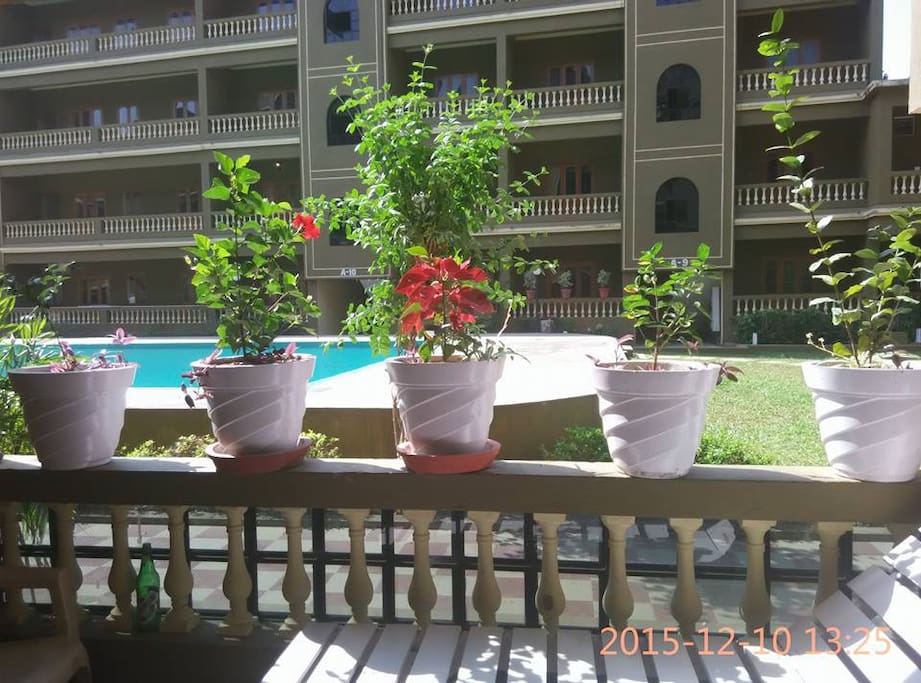
Poolside 1 BHK Apartment in Resort
Siolim, Goa, India
Serene Siolim- Gateway to the pristine beaches of North Goa at Tropical Dreams Resort with Lush green surroundings Ground Floor across the biggest swimming pool in Goa is furnished with SplitAC Ref...Vacation Rentals in Siolim
Tuesday, September 14, 2010

Check out Political Autonomy for Gilgit Baltistan a Distant Dream
Check out Political Autonomy for Gilgit Baltistan a Distant Dream
Political Autonomy for Gilgit Baltistan a Distant DreamGilgit, September 14: The Gilgit Baltistan Empowerment and Self-Governance Ordinance promulgated in August 2009 was directed towards granting internal political autonomy to Gilgit Baltistan. The...
Sunday, September 12, 2010
Pakistan: A land left to drown by the ‘timber mafia’
Pakistan: A land left to drown by the ‘timber mafia’
courtesy: http://www.heraldscotland.com/news/world-news/a-land-left-to-drown-by-the-timber-mafia-1.1051230
29 Aug 2010
The warnings regularly given by all manner of experts had been ignored for decades.
If Pakistan’s authorities continued to allow the country’s timber mafia and a benighted and oppressed peasantry to strip the country’s forests at a faster rate than anywhere else in Asia, as is happening, floods of Biblical proportions would be inevitable. They would not be acts of God. They would be man-made catastrophes.
And so it came to pass – as August began – that heavier than usual, but not unprecedented, monsoon rains fell on the largely forest-denuded northwest Himalayan, Karakoram and Hindu Kush mountains and foothills, swelling the mighty 2000 mile-long Indus river, originating in Tibet, and others such as the Jhelum, Swat, Chenab, Ravi, Beas, Sutlej and their many tributaries.
What then happened, reports by Pakistani journalists and environmental campaigners have steadily established, was truly terrifying.
Trees felled by so-called illegal loggers – an infamous “timber mafia” that has representatives in the Pakistan Parliament in Islamabad and connections right to the top of government and the military – are stacked in the innumerable nullahs [steep narrow valleys], gorges and ravines leading into the main rivers. From there they are fed into the legal trade, earning the mafia billions of dollars yearly. “Other than landslides, soil erosion and the occasional homes and crops being swept away, it [the forest denudation] was not considered a disaster and hence didn’t make the headlines,” wrote Ayesha Tammy Haq, a columnist with the Pakistan daily Express Tribune newspaper.
These forests used to absorb the ferocity of the floodwaters, Tahir Qureshi, forestry expert
But the deforestation and other actions of the timber mafia were ticking time bombs waiting for a trigger to set off explosions.
This year’s monsoon lashing northern Pakistan with unusual intensity would historically have been absorbed by extensive forests, much like multiple layers of blotting paper, allowing the rains to run off more sedately than in modern times.
But this month the mud and water deluge cascaded off the tree-bare mountains and hills with exceptional force and barrelled down towards the plains in mammoth fury. In a trade-off, the timber mafia had allowed the mountain poor to raid the logs stacked in the nullahs to make doors, window frames and furniture for their homes. But, propelled by the force of the run-off, the logs turned into instruments of destruction, smashing all in their wake. Rivers and dams turned black with timber. Relief workers said bridges, homes and people were destroyed and swept away by the hurtling and swirling logs before the waters spread on to the plains below, engulfing an area of more than 60,000 square miles, more than twice the land area of Scotland.
The United Nations’ Office for the Coordination of Humanitarian Affairs estimates that some 8000 schools were either destroyed or partially destroyed by the torrents.
It is not only the mountain forests that have been devastated. When Pakistan became independent from Britain and separated from India in 1947, thick riverine forests lined the Indus on its thousand mile journey across the plains.
“These forests used to absorb the ferocity of the floodwaters,” said Tahir Qureshi, a Pakistan-based forestry expert for the International Union for the Conservation of Nature (IUCN).
“The riverine forests were the first line of defence against the raging floods [which have inundated the plains annually for thousands of years]. They have been cut everywhere from Murree [a hill station on the Jhelum River before it fans out onto the plains] to lower Punjab [in the heart of the plains] to upper Sindh [the province where the Indus flows into the Arabian Sea via a massive delta].”
Just before this year’s monsoon broke over Pakistan, local journalists reported that a landlord, a leading member of the plains branch of the timber mafia, had sent in hundreds of employees, equipped with guns and heavy machinery, to chop down thousands of trees in one of the most important remaining riverine forests in Sindh, the Khebrani and Rais Mureed Forest along the banks of the Indus.
Despite a ban on the cutting down of forests, local journalist Salam Dharejo reported that the landlord, with support from top forestry and environmental protection officials, established a camp for his labourers “and within two nights cleared 180 acres of forest land by chopping down 90,000 trees”.
Dharejo continued: “As a consequence of political interventions, the corruption of forest officials and the nexus between land grabbers and the timber mafia over the last 25 years, the riverine forests of Sindh are on the verge of extinction … They have been ruthlessly exploited by the law enforcement agencies, politicians and bureaucrats for their own vested interests. Policemen took bribes from the timber mafia in return for allowing them to fell trees.”
Dharejo quoted a forest department official as saying of the Pakistan government’s much trumpeted reforestation strategy: “You will not find a single fresh forest. The reforestation exists only on paper, while on the ground you will find ruthless deforestation. Forestry officers are involved in unauthorised wood-cutting and issuing of unauthorised passes for the transportation of forest wood and disposal of government machinery.”
Ghulam Hussain Khoso, a cattle herder resident within the Khebrani and Rais Mureed Forest, said: “I have been born and brought up here. Over time I have seen the rapidly decreasing size of the green patches. I do not trust that the forest department will ever improve forest conditions. The dacoits [traditional fabled bandits] were better custodians of the forest than the forest department itself. The thick forests served as a hideout for the dacoits: therefore they protected them and did not allow anyone to destroy them.”
Dawn, Pakistan’s most widely circulated English language daily newspaper, said 80 million trees had been chopped down in the “protected” Khebrani and Rais Mureed Forest in the three years before the floods inundated the plains this month. In just 36 months the forest had shrunk from nearly 20 square miles to barely three square miles, causing serious damage to the environment and hurting the livelihoods of local herders, like Ghulam Hussain Khoso, whose ancestors had grazed their livestock in the woodlands for generations without devastating the ecosystem.
“The claims and slogans of officialdom are completely divorced from reality,” said Dawn in an editorial. “The government is promoting ‘Green Pakistan’ even as trees continue to be slaughtered across the country in the name of development. The timber mafia is denuding the country’s woodlands. The situation is desperate and is deteriorating by the day.”
Some 900 miles to the north, in the mountains north of Murree, the story is similar. In the Ayubia National Park – legally a government-protected forest – the UN Office for the Coordination of Humanitarian Affairs reported, before the current flooding happened: “The forest is disappearing fast, threatening the lives and livelihoods of thousands of people.”
A forest official, quoted by the UN agency on condition of anonymity, said government officials were encouraging the forest mafia to extract trees from the Ayubia Park. “The first major illegal tree-felling took place in 1988,” said the official. “About 400,000 cubic feet of forest wood was illegally cut in that year, and one million cubic feet was extracted illegally in the next three years. Huge fellings continue.”
The official said the government allowed the illegal timber to be exported to other provinces without a fine, which encouraged the timber mafia to cut down ever more trees knowing it had political clout. “The government did begin to fine fellings, but the fine was so small that it encouraged the timber mafia instead of discouraging them,” the official added.
By 2005 Pakistan had lost 25% of the forest cover that existed in 1990. Experts predict at current rates of exploitation – more than 100 square miles of trees clear-felled annually – the remaining forests will all be gone by 2010. It means this year’s catastrophic floods will be repeated again and again, and all the aid in the world will do little good until someone, somehow, begins a reforestation programme. As John Muir, the great Scottish naturalist, once said: “God has cared for these trees, saved them from drought, disease, avalanches, and a thousand tempests and floods. But he cannot save them from fools.”
Response to Ahmadiyya Mosque Attacks in Lahore, Pakistan
An Ahmadi Muslim responds to the attacks on two Ahmadi mosques in Lahore. The root cause of this terror against the Ahmadiyya Muslim Community lies in the anti-Blasphemy laws which are part of Pakistan's Constitution.
Saturday, September 11, 2010
'Mumbai II could spark off full blown Indo-Pak war' - Hindustan Times
'Mumbai II could spark off full blown Indo-Pak war'
Press Trust Of India
Washington, September 11, 2010First Published: 08:07 IST(11/9/2010)
Last Updated: 10:45 IST(11/9/2010)
As US observes the ninth anniversary of the September 11 terror attacks, a reputed Washington-based research group today warned that a repeat of 26/11 may lead to a full blown Indo-Pak war. Preventing Mumbai-II from occurring remains a major foreign policy challenge for the US, the report said.
"One of the more predictable foreign policy challenges of the next years is a 'Mumbai II': a large-scale attack on a major Indian city by a Pakistani militant group that kills hundreds," said the 42-page report from the Bipartisan Policy Centre's National Security Preparedness Group, a Washington based research group.
Authored by Peter Bergen and Bruce Hoffman, the report "Assessing the Terrorist Threat" appreciated the considerable restraint shown by India in its reaction to the provocation of the Mumbai attacks in 2008.
"Another such attack, however, would likely produce considerable political pressure on the Indian government to 'do something'. That something would likely involve incursions over the border to eliminate the training camps of Pakistani militant groups with histories of attacking India," the report said.
"That could lead in turn to a full-blown war for the fourth time since 1947 between India and Pakistan," it said. "Such a war involves the possibility of a nuclear exchange and the certainty that Pakistan would move substantial resources to its eastern border and away from fighting the Taliban on its western border, so relieving pressure on all the militant groups based there, including al-Qaeda," said the report.
Over a three-day period in late November 2008, Lashkar-e-Taiba (LeT) carried out multiple attacks in Mumbai targeting five-star hotels housing Westerners, as well as a Jewish-American community centre, it noted. Additional incidents involved the Pakistan-born US citizen David Headley (who had changed his name from Daood Sayed Gilani).
Headley's reconnaissance efforts on behalf of LeT were pivotal to the attacks in Mumbai, the report said. "Last year he also planned an operation to kill those responsible for the 2005 publication in a Danish newspaper of cartoons of the Prophet Mohammed, which many Muslims had deemed to be offensive," the report said.
Tuesday, September 7, 2010
The Hindu : News / National : “To engage Pakistan does not mean surrender”
“To engage Pakistan does not mean surrender”
SIDDHARTH VARADARAJAN
NEW DELHI, September 7, 2010
Stoutly defending his decision to resume talks with Pakistan, Prime Minister Manmohan Singh said on Monday that India must engage with its neighbour “regardless of the complexion of the set-up in Islamabad” and that “engagement does not mean surrender.”
Dr. Singh also said the leaderships of India and China were committed to the peaceful resolution of all outstanding differences, even if the bilateral relationship was a mix of both competition and cooperation.
He was speaking to a group of editors at his residence. “Engagement is necessary in order to convey our concerns to Pakistan. Conveying our concerns through the media or harsh statements in public or statements in Parliament is not as effective as talking face to face with the regime that may be in power in Pakistan,” he said.
The dialogue process came to a halt after 26/11 because Indian public opinion demanded that “Pakistan [be held] to account for this tragedy.” India had hoped that this would give India leverage “to coerce Pakistan to pay greater attention to our concerns but unfortunately that has not happened,” he said. “I think Pakistan has acquired a greater amount of leverage in dealing with the United States and others and [so] the results were not as expected.” That is why at Thimpu “my effort was to find ways and means of getting the two countries once again back on the path to a dialogue,” the Prime Minister said.
Acknowledging that things had not moved smoothly since then — in India-Pakistan relations there are always mishaps, uncertainties, some things happen like what happened at the two Foreign Minister meetings — Dr. Singh said it was his sincere belief that the process of engagement had to continue regardless of the government that was in power there. “But that does not mean Pakistan will change its thinking vis-à-vis India, that it would cease to regard an India-centric policy as its number one priority. We have to be realistic enough to take account of all the uncertainties that have been our bedevilling relations for nearly 60 years. But at the same time, if we don't want to go to war then engagement and dialogue are the only way forward,” he added.
Asked how the process was likely to be carried forward, Dr. Singh said he hoped Pakistan's Foreign Minister S.M. Qureshi, “accepts the invitation of our Foreign Minister and visits us.”
On Afghanistan, he said, India was committed to assisting the people of that country in their efforts to develop as well as to maintain their democratic system and independence. This was a commitment India would abide by even after the U.S. and other foreign forces left Afghanistan, he added.
Keywords: India-Pakistan relations, Mumbai terror attacks, Manmohan Singh
Monday, September 6, 2010
DAWN.COM | Islamabad | Meat prices set to go up by 20 per cent
Meat prices set to go up by 20 per cent
By A Reporter
Sunday, 15 Aug, 2010
ISLAMABAD, Aug 14: The local meat sellers are planning to increase the price by Rs50 on the pretext that the country is facing shortage of animals due to floods, Dawn has learnt.
This is despite the fact that the villagers are willing to sell animals at lower than market rates.
Meat sellers want to increase price by Rs50 per kilogram for mutton and around Rs30 per kilogram for beef, claming that large number of animals were killed in the floods and the remaining were not enough to meet the requirement.
“The situation is serious and we expect that meat prices would increase by up to 20 per cent in two weeks,” said Khursheed Qureshi, Chairman Jamiat–ul-Quraish, meat welfare association.
The authorities, including the international donors, estimate that around 450,000 domestic animals—goats, sheep, cattle, and loading animals—might have perished in the floods.
The meat merchants claim they were facing problems in purchasing animals from Khyber Pakhtunkhwa and western and southern Punjab as weekly animal markets have not been held. “Unfortunately most of the cattle and goat rearing areas like Mianwali, Bhakhar, Layyah, Kot Addu and Khyber Pakhtunkhwa have been hit by floods,” Mr Qureshi said.
This situation has created a new crisis for animals sellers. “There is no grass around, and the straw stored in the open and fields for animals has been swept away,” said Akram Burq, a resident of Khushab district, whose village has been inundated. “A young cow having a market value of Rs40,000 is being sold only for Rs25,000,” he added.
Many villagers are selling livestock at lower prices, as they cannot feed their cattle and fear that animals would die of disease and weakness.
“Actually it’s a balancing act to get away with some of the animals to save others,” said Asfandyar Khattak, who lives in a village near Nowshera. He said the older cows and buffaloes that give milk are costlier and people try to save such animals.
Mr Qureshi, who is also a director of the Dairy Development Board, acknowledged that livestock rates have declined in flood-hit areas.
“But the real benefit is being bagged by the middleman,” he said, adding that the devastating flood was hindering transportation of animals to main cities. He said the only way out of the situation is to import fodder to feed the surviving livestock.
Subscribe to:
Posts (Atom)
Popular Posts
-
पाकिस्तान में बसे अल्पसंख्यक पाकिस्तान में बसे अल्पसंख्यकों ने पिछले दिनों दो दिन का एक सम्मेलन किया था जिसमें हिन्दू, ईसाई, सिख और मिर्जा...
-
Forum focuses on Arab revolutions - Middle East - Al Jazeera English Ahmet Davutoglu, Turkey's foreign minister, is one of the keynote s...
-
 The fatwa factory by Sana Saleem on 01 22nd, 2011 | Comments (372) Last night, I happened to watch the most brilliant (and at the same time...
 -
First Turkish Muslim model strips for Playboy mag - Hindustan Times Posing provocatively on the cover of German Playboy magazine with one br...
-
AN OPEN LETTER TO THE INTERNATIONAL COMMUNITY by Comrade Shafi Burfat, CHAIRMAN, JEAY SINDH MUTTAHIDA MAHAZ, SINDH. http://www.facebook.com/...
-
sarbaazbaloch | July 06, 2009 | 9 likes, 3 dislikes BALOCH SARMCHAR ATTACK POKISTAN ARMY ON REMOTE BOMB NEAR DASHT GHORAN Category:
-
Defanged! The Great Game’s changed | Deccan Chronicle he day the world changed forever. Osama bin Laden. Unarmed. Taken out with one bullet ...
-
“Padded Bras are Devil’s Cushions” says Council of Islamic Ideology By Amna Gilani By Amna Gilani • Mar 10th, 2011 • Category: Entertainme...
-
UAE issues 'stapled visa' to PoK residents including its PM The United Arab Emirates has begun issuing "stapled visas" to ...
-
DAWN.COM | Islamabad | Meat prices set to go up by 20 per cent Meat prices set to go up by 20 per cent By A Reporter Sunday, 15 Aug, 2010 IS...
